Hey, all!
Below is the link to read my interview with Kayla Posney at the Pittsburgh Historical Fiction Examiner.
This interview was thought-provoking and great fun!
Check it out!
http://www.examiner.com/article/10-questions-with-historical-fiction-blogger-cynthia-mcarthur
Thursday, September 26, 2013

Sunday, September 1, 2013
Call Me Zelda (Erika Robuck)

Let's start playing September catch-up with this great book which was published in May.
Call Me Zelda is the story of Zelda Fitzgerald (not just the wife of Scott!) and her nurse Anna.
Brilliant. This book was brilliant. Not only did the author follow the historical details, but she created characters who were fully-developed and real. The insight the author has into Zelda's mental illness is all lent to Nurse Anna as she cares for and bonds with Zelda Fitzgerald, sometimes seemingly to her own detriment.
Nurse Anna has her own past, full of war, loss and unimaginable suffering, and as her story slowly unfolds,as she slowly gives more of herself to her patient, so does Zelda's. The story, the characters, the relationships all had such depth and honesty that it was somewhat bittersweet to watch it all unfold.
From Nurse Anna's first star-struck encounter with Zelda and Scott Fitzgerald, through the day to day all-consuming, draining care of a self-destructive schizophrenic, during the quiet garden conversations and even Zelda rescuing Nurse Anna from herself, this book was brilliant and I recommend it to anyone
Wednesday, August 28, 2013
Upcoming Reviews (and such!)
Cynthia's Summer Sabbatical is coming to an end!
It was a great, lazy Summer and many interesting books were read.
Look for new reviews beginning in September!

Did I mention that I learned to hula-hoop this Summer?
Wednesday, May 1, 2013
The Liar's Gospel (Naomi Alderman)

The Liar's Gospel is the stories of 4 characters connected to Jesus of Nazareth: his mother, Mary; his betrayer, Judas; his persecuter, Caiaphas; and his accidental rival, Barabbas. Four chapters, four characters, four viewpoints-each from the first person.
It has taken me a while to review this book, simply because I wasn't sure what to say about it.
I must first say that I am a Christian, and although this book is pretty far off from what Christians are generally taught, it was very interesting. Who is to say it did not happen this way? The characters were very realistic, flawed and human. And although each of the characters play an important part in Jesus' life, Jesus didn't always figure prominently into their lives. To some he was a passing madman, someone to feel sorry for, or simply forget.
I enjoyed the author's simple, earthy writing style, and appreciated that she held no punches. As a Christian, the lack of divinity (for lack of a better phrase!) was sometimes hard to take, but I made it through and I am glad that I did.
My favorite line of the book comes from Caiphas--"This?" He asks...he lives a whole life and is remembered for "This?" Pretty brilliant.
House of Rocamora (Donald Michael Platt)

House of Rocamora is the continuing story of Vicente de Rocamora, former confessor to the Royal House of Spain and former candidate for Inquisitor General, now an exiled and self-circumcised Jew named Isaac.
Vicente has left Spain in his long journey to find himself and peace for his soul. He has lost all he holds dear and must start anew. He has traveled to Amsterdam in 1643, seeking to find a broad-minded society and to study his true calling, medicine. Although many question his desire to start a new career in his forties, they are also flattered to be acquainted with such an illustrious person and impressed by his intelligence and intensity. As years pass, Isaac de Rocamora does find a measure of harmony in his career and new family, but as with everything in his long life, tragedy intertwines with fulfillment, and at the last he finds himself again seeking his soul’s peace.
This book is well-written, though it is a bit slow in the beginning, as Isaac is still unclear about his true path and does some wandering. It will help the reader to have read the first book in this series, Rocamora, to understand the impact of events happening in the early sections of this novel. The story picks up as Isaac begins to see his way and put his plans and ideas into action. I enjoyed both books in the series, though I believe I enjoyed this sequel a bit more than the first book, and look forward to the next, which I hope is not too long in coming.
My review courtesy of the Historical Novel Society.
Friday, February 1, 2013
The Forgotten Queen (D. L. Bogdan)

The Tudors were a fiery, memorable family. Headstrong, passionate, often foolhardy, restless… this describes the forgotten Tudor, Queen Margaret of Scotland. She was Henry VIII’s older sister, but more importantly, she was the mother of King James V of Scotland, the father of Mary, Queen of Scots. She tried to set into motion peace between England in Scotland, which would finally be realized with her great-grandson James.
Margaret leaves England at an early age to wed the King of Scotland. Though they have a loving relationship, Margaret can never understand why he must always have a mistress. She sees this as a personal affront, but when he dies a few years into their marriage, leaving her a pregnant widow, she misses him dearly. Through several regents, Margaret tries to hold Scotland together. She realizes much too late that her second husband, the Earl of Angus, is greedy and grasping, and by then Scotland is in an uproar.
Margaret lived a long life, having many children. Only two survived infancy, the future King James V and the neglected Lady Margaret Douglas. Bogdan’s Margaret is impetuous, selfish, passionate, lonely, and full of regrets. Yet she never stops dreaming, or hoping for the best for her adopted homeland of Scotland.
This is an excellent, fast-paced story. Margaret is a fully developed character who was at times infuriating, and at others pitiful. The love Margaret must have felt for her country comes through in Bogdan’s lovely descriptions of the country and in Margaret’s feelings about it. Highly recommended.
My review courtesy of the Historical Novel Society.
Tuesday, January 15, 2013
The Forbidden Queen (Anne O'Brien)

One of my favorite stories in English history is the story of Katherine of Valois and Owen Tudor's marriage. So romantic, so unexpected, so honest.
But this book is not just about that particular story. This book is about Katherine of Valois, beginning from her neglected childhood in a French court ruled by a mad King and an absent Queen. Katherine is telling the reader her story, from her point of view, naive and foolish as it may have been at times. Katherine is heartbreakingly honest with both the reader and herself as she rises to become Queen of England to the great warrior King Henry V, the man she dreamed would be her hero and true love, but died before the dream could even be touched upon. Katherine is straight forward and remorseful as she tells the reader of her depression and melancholy after the death of Henry, and then angry when her lonely heart falls victim to the schemes of an ambitious courtier. Katherine is truthful, never sugar-coating her actions, even when she happens to accidentally fall deeply in love with her servant, Owen Tudor. Katherine makes no excuses for herself as she grasps for the happiness that she has always sought, fighting tooth and nail with council and country for what she believes her family deserves.
Anne O'Brien has written a beautiful, bittersweet novel. This story deserved to be told, in exactly this manner. Katherine's story, on Katherine's terms. Highly Recommended.
Monday, December 31, 2012
Shadow on the Crown (Patricia Bracewell)
In Shadow on the Crown, Patricia Bracewell has written an engaging story about Queen Emma and her journey from Normandy to England, embellished with forbidden love, crushing sense of duty, and ultimately hope.
King Aethelred (the Unready) of England’s uncrowned wife has died in childbirth, and admidst unrest on his council and Viking raiders on England’s shores, he is forced into an alliance with Normandy. Emma is to be the peaceweaver whose influence spans the Narrow Sea. To Emma’s disappointment, her husband is a misogynist brute who resents and mistrusts his young Norman bride, and many do not agree with his choice of a wife, including the Lady Elgiva who wanted the throne for herself. The only light in Emma’s new life is Aethelred’s brood of young children, and surprisingly his eldest son Athelstan, though any child of her body would be rival for the eldest aetheling’s status as heir.
Emma is the victim of an uncaring husband, a hostile witan, and even the Vikings themselves, but she never displays a victim mentality, or self-pity. Emma is the annointed Queen of England, and she does everything she can, even at her own personal cost, to do the best thing for England and it’s people.
This book was very well-written, the plot moved quickly and easily and the author did a great job of keeping all the characters straight. I would have liked to see a little more development in the early stages of the above-mentioned “forbidden love.” But once it was established is was a lovely and heartbreaking relationship.
Shadow on the Crown is the first in a series of books and I eagerly await the second installment.
Sunday, December 23, 2012
God Save the King (Laura Purcell)
I stumbled across this book by accident when a friend added it on Goodreads. Where was the publicity for this book? It certainly deserved some!
This was a completely engrossing novel. Told from the points of view of Queen Charlotte, her daughters Princess Charlotte (called Royal in the book) and Princess Sophia, it painted a vivd portrait of this Hanoverian family beset by so much tragedy. Queen Charlotte is the beloved wife of King George, who is slowly slipping into madness. Their five daughters, once happy and joyous, now needed at home to help in the struggle to keep their father sane. As the family ages, the King slips further and further from them, and Queen Charlotte keeps her daughters closer and closer as she slides into her own bitterness. As the Princesses age, they long for escape from the misery of their father's illness and their mother's resentment, yet every offer of marriage is refused as the Queen's selfishness will not allow them to escape. Eventually Royal does marry, and finds both happiness and tragedy in her own family. Meanwhile, the other girls long for their own lives to begin, leading to scandalous rumors, some true and some untrue and even a premature death. I began the story feeling much sympathy for Queen Charlotte, but eventually her bitterness pushed her family ( and this reader) away from her. The- almost middle-aged when she married -Royal was the most sympathetic figure in my opinion, though they were all interesting characters. Very well-researched and beautifully written. This is the story of King George's women and all they sacrificed to heal the man they loved.
Thursday, December 20, 2012
My Top 3 of 2012
I have read a lot of engrossing, fascinating, entertaining, wonderful books this year. It was pretty difficult to pick only three for my Top 3 reads. These books are not in any particular order, as they are all so different and incomparable. These are the three books that I enjoyed the most this year, that I am likely to one day re-read. I will post an excerpt of my reviews here, but for the full reviews, you'll have to go to the corresponding post.

Along with historical accuracy, a swift-moving plot and little family details that any mother would remember and treasure, such as Lady Dudley’s talking parrot and Lady Grey’s dismay at her daughter’s surprising lack of common sense, the novel includes characterizations at which this author excels. She takes the infamous villains of history and presents them as relatable human characters. This book at times made me smile and then cry with the tragedy. I very much recommend it. I reviewed this for the wonderful Historical Novel Society.

This novel asks the question, "Was she a gold-digging, unprincipled harlot, or was she simply doing what was best for the King, and England, and taking what she could along the way?"
You must admit, she never left the King by choice. Was that because she couldn't get anything if she wasn't there with him? Or was it because she truly cared for the King? Not only that, but what forces were pushing her to behave the way she did?
This book answers those questions with much insight and poingnancy. I reviewed this for this blog, received the copy from NetGalley.

When I first began this book, I thought to be reading a simple, possibly frilly book about the back-alley lace trade in late 1600's France and Flanders. Imagine my surprise when the story is told from the alternating, first-person points of view of seven different players, one of whom is so improbable, I just did not know how it could possibly flow.
But flow it did! I reviewed this for this blog, received the copy from NetGalley.
Those are my top three! What are yours?
Along with historical accuracy, a swift-moving plot and little family details that any mother would remember and treasure, such as Lady Dudley’s talking parrot and Lady Grey’s dismay at her daughter’s surprising lack of common sense, the novel includes characterizations at which this author excels. She takes the infamous villains of history and presents them as relatable human characters. This book at times made me smile and then cry with the tragedy. I very much recommend it. I reviewed this for the wonderful Historical Novel Society.
This novel asks the question, "Was she a gold-digging, unprincipled harlot, or was she simply doing what was best for the King, and England, and taking what she could along the way?"
You must admit, she never left the King by choice. Was that because she couldn't get anything if she wasn't there with him? Or was it because she truly cared for the King? Not only that, but what forces were pushing her to behave the way she did?
This book answers those questions with much insight and poingnancy. I reviewed this for this blog, received the copy from NetGalley.
When I first began this book, I thought to be reading a simple, possibly frilly book about the back-alley lace trade in late 1600's France and Flanders. Imagine my surprise when the story is told from the alternating, first-person points of view of seven different players, one of whom is so improbable, I just did not know how it could possibly flow.
But flow it did! I reviewed this for this blog, received the copy from NetGalley.
Those are my top three! What are yours?
Monday, November 26, 2012
Destinies (Karleene Morrow)

I will admit, that although I am an avid reader, I was a touch intimidated by the length and (and mostly) the subject of this book. My feelings proved to be completely unvalidated.
This story sucked me in immediately. We meet Katherine as she is gloating over a corpse, and we meet Christian Kehler as he is listening to his father and his friends discuss their coming immigration to Russia.
The journey is long and dangerous for the German families, as they come to realise that Russia is nothing like Germany. Katherine also has a long journey in her temporal fight to free the serfs of Russia and bring Western enlightenment to her country.
I found myself gasping aloud many times at the shocking actions of the characters in this story. There was not a moment in this book when I was bored, I enjoyed every last word. This is a wonderful look into Katherine the Great's great weaknesses, and the coming of age story of a young German immigrant (and his family) trying to find his way in the world.
Every character has a purpose, as does every storyline. There are so many events in this book that I would love to discuss, but I want the reader to read it new and fresh, just as I did. No spoilers!
I very much recommend this book!
Friday, November 16, 2012
Fair and Honest.
I must take a moment out from reading to voice an opinion.
I began reviewing books as a hobby about a year and half ago. It is something that I genuinely enjoy, and have no intention of quitting.
Book reviews are very important to a reader. No intelligent person judges a book by it's cover. They go to sites such as Amazon, Goodreads, the Historical Novel Society and read reviews. There are always good reviews, bad reviews, apathetic reviews-always. No one likes every book every time. I so admire a person who has the dream of writing and sits down and gets to work to do so. I can imagine the time and effort, the blood, sweat and tears and love and passion that go into the creation of a writer's work. And every other reader imagines it too. Therefore no one WANTS to dislike a book. No one wants to sit down with novel and not engage with it. Not only are writers passionate, but readers are as well.
I have found as I further myself in reviewing, that there are countless kind, reachable authors who adore and appreciate their readers, and likewise their readers do the same.
I have also come across authors who resent readers who express disappoinment in their work. I understand. Their life's blood has been poured into this work, and this person didn't like it. It is heartbreaking for the author, I am sure.
However, that does not make it acceptable to be rude or snide (especially in a public forum) to your readers. You alienate your current and potential audience.
I will always give a fair and honest review. I will try my best to enjoy a book. I will read a book through 100 different eyes to gain a different perspective if I feel myself drifting to the "dislike" side of a book. But the fact remains, if there was something I found to be disappointing in the book, I will say so in a professional manner. I am not trying to hurt anyone's feelings; I am not trying to lessen an author's income or do anything else harmful to for or beacuse of the author. But as a lifelong reader, I appreciate honest reviews, and so does every other reader in this world.
We WANT to read your books. Don't alienate us.
I began reviewing books as a hobby about a year and half ago. It is something that I genuinely enjoy, and have no intention of quitting.
Book reviews are very important to a reader. No intelligent person judges a book by it's cover. They go to sites such as Amazon, Goodreads, the Historical Novel Society and read reviews. There are always good reviews, bad reviews, apathetic reviews-always. No one likes every book every time. I so admire a person who has the dream of writing and sits down and gets to work to do so. I can imagine the time and effort, the blood, sweat and tears and love and passion that go into the creation of a writer's work. And every other reader imagines it too. Therefore no one WANTS to dislike a book. No one wants to sit down with novel and not engage with it. Not only are writers passionate, but readers are as well.
I have found as I further myself in reviewing, that there are countless kind, reachable authors who adore and appreciate their readers, and likewise their readers do the same.
I have also come across authors who resent readers who express disappoinment in their work. I understand. Their life's blood has been poured into this work, and this person didn't like it. It is heartbreaking for the author, I am sure.
However, that does not make it acceptable to be rude or snide (especially in a public forum) to your readers. You alienate your current and potential audience.
I will always give a fair and honest review. I will try my best to enjoy a book. I will read a book through 100 different eyes to gain a different perspective if I feel myself drifting to the "dislike" side of a book. But the fact remains, if there was something I found to be disappointing in the book, I will say so in a professional manner. I am not trying to hurt anyone's feelings; I am not trying to lessen an author's income or do anything else harmful to for or beacuse of the author. But as a lifelong reader, I appreciate honest reviews, and so does every other reader in this world.
We WANT to read your books. Don't alienate us.
Sunday, November 4, 2012
An Honourable Estate (Elizabeth Ashworth)
This story of England, 1315-1322 (?), was really well written and well-researched. It is the story of Mabel and William Bradshaw, minor nobles during the time of Edward II's reign. With famine and taxes pushing his tenants to the breaking point, some having already died, William joins up with a rebellion against his overlord, the Earl of Lancaster, and fails miserably. He and several of his friends become outlaws, dependant upon the forest for survival. Meanwhile Mabel is left alone on their estate, having no choice but to believe that her husband has died. Years pass and both William and Mabel are forced to make decisions neither would have made under ordinary circumstances.
The imagery and dialogue were both very well-written and realistic. The characters were all relevant to the story, and Edward II was shown in a very unbiased light. The only complaint I had with this book is that the time frame was not very well laid out. By that I mean that the only way I knew a year has passed in the story was by the mention of a change of season. I was a little surprised to find out in the end exactly how much time has passed.
I did enjoy this book and I do recommend to those interested in a quick read about medieval England.
Thursday, November 1, 2012
She Wore Only White (Dorthe Binkert)

This book has been translated from it's original German.
It is said the journey is more important than the destination. That is true of She Wore Only White. From the moment the beautiful lady in the white evening gown steps foot on the ocean liner Kroonland, her mysterious appearance causes scandal. Quickly rumor gets around that the lady is a stowaway of unknown origins, friendless, penniless, and with only the white dress to her name. Those passengers kind or brave enough to speak to her in those first days express surprise at her vacant and melancholy demeanor. The sculptor Henri, on his way to the World’s Fair in St. Louis, decides she must be escaping a very sad past, and as it turns out, so is he.
As the days spent cramped inside the ship draw the passengers closer, they find comfort and maybe some clarity in their newfound and unexpected relationships with each other. As they unknowingly turn to one another for support over rough seas, literally and figuratively, revelations and life-changing decisions are made.
The character development in this novel is slow and steady and complete, and the prose elegantly expresses the yearning, oppression, and hope felt at the turn of the 20th century, a time when society was changing rapidly, to the pleasure and dismay of the passengers of the Kroonland. The story is just a priceless snapshot in so many peoples’ lives and will leave you wondering where their lives took them when they left the Kroonland and at last stepped onto solid land again
My review courtesy of the Historical Novel Society.
I, Jane (Diane Haeger)

This book proves that even the most ordinary lives can become extraordinary. Growing up as the plain daughter of an embarrassingly ambitious mother, Jane Seymour learns to fade into the background of life, a defense mechanism learned early at the hands of bullies. But far from being a boring character, Jane has a full and rich range of emotions and ideas that come to fruition, growing and changing as she is forced into court life in order to support the hope of her family, her eldest brother, Edward.
Jane goes to France at a young age as a lady companion to King Henry's sister Mary as she marries the King of France, where she renews a friendship with her neighbor and once champion, William Dormer. Their friendship proves unforgettable to both of them, even throughout the years as Jane waits on the exiled Queen Katherine, comes to know the reviled Anne Boleyn, and is eventually sent back home with no prospects for the future. William and Jane want to marry but are denied the chance by William's parents. Jane has given up hope when King Henry, tiring of Anne, comes by chance to her home after a hunting accident. There he comments on Jane's sweetness, which does not go unnoticed by her ambitious family, and Jane realizes there may be more to life than loneliness and boredom. The rest, as they say, is history.
I really enjoyed this book. I would have liked the story to go a bit further; it ends rather abruptly, as I suppose Jane's life did. I recommend this book to anyone interested in this unassuming but most important historical figure.
My review courtesy of the Historical Novel Society.
Tuesday, October 30, 2012
Oleanna (Julie K. Rose)

Oleanna is aptly titled, as it is the story of Oleanna. So many books proclaiming to be about one character wind up being about several secondary characters as well. Not so with this book. We are with Oleanna, we see the others through her eyes, and feel them with her emotions, but it is her story. She is afraid and also coming alive with every page of the story. The imagery was unbelievable! I could almost feel the cold Norwegian air, even see my breath as Oleanna and I sat around a fire. The dialogue was very realistic, with Oleanna sometimes saying more than she needed to, and not always in an eloquent manner, as so often happens in real life. There were many times when in conversation with someone, Oleanna's questions would be put off with a change of subject, and you could feel her resentment and frustration. This is a story about Oleanna coming to terms with herself, and it was a pleasure to be with her on her journey. I would indeed recommend this book. I haven't read anything at all about Norway at the turn of the century until this book, and the author represented the fear and excitement of change so well. Very good read.
Monday, October 29, 2012
How to Tame a Willful Wife (Christy English)

I grew up reading Regency Romances. I forswore them years ago for "serious" reading. But I must tell you, I couldn't resist this book. I like Christy English's style, so I had to give it a go. And I loved it! Truly, it is the best Regency I have read! I won't go too much into the story, but I will say that the characters were wonderful, well-written and likable, even in their worst moments. Christy's imagery was beautiful, and that is so important in an historical story. The story was spicy and sweet and entertaining. I whole-heartedly recommend this book. (By the way, when I say it is a spicy story, I mean habanero spicy!)
Sunday, September 16, 2012
A Dangerous Inheritance (Alison Weir)
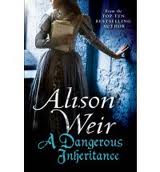
I regret that this book will be for sale on October 2nd. Why? The Richard III dig. I do not recommend this book to anyone just beginning with Richard. I am a Ricardian, yes. I have read a lot of information both pro-and anti- Richard and have made my judgment that he did not kill the princes. I will not go into everything that I have or haven't read, but I always keep an open mind.
And as such, I read Alison Weir's The Princes in the Tower. I am amazed that I did not throw the book into the fire when I was finished. That being said, I also kept an open mind when reading this book. I enjoyed Innocent Traitor, so I am prepared to enjoy an author's work, even if we don't see eye to eye on certain points.
Ok, I knew going in that she was anti-Richard, and I was prepared for that. However, the story is told from two different perspectives in two different time periods in two different points of view. Katherine Grey, from the bizarre present tense view of past events; and Katherine Plantagenet, Richard's illegitimate daughter, third person point of view. Then, about 70% through the book we have an interlude of Elizabeth I's point of view...it just didn't flow to me. I admire authors who try to do something different with their writing, but this was uninspired and mundane and the interlude just struck me as weird. Alison said in her author's note that she put the interludes there so that the reader would know Elizabeth's point of view, and not see her as a monster. Ok, so why not also have Richard's point of view in an interlude as well? It would have made more sense, and hey, if she still wanted to portray him as an aspiring tyrant, fine. At least the perspectives would have made a little more sense.
So, was I impressed? No. Do I regret reading the book? Maybe. Will I ever read another of Weir's novels? Probably not.
Now, I will go refresh my soul with the Richard book I recommend to everyone, Sharon Kay Penman's The Sunne in Splendour, one of the best books I have ever read.
Thursday, August 30, 2012
A Happy Amateur Reviewer!


Sunday, August 12, 2012
Freud's Sister (Goce Smilevski)
This book will be published on August 28th. Translated from Macedonian.
Adolfina Freud was one of many children, and was a sickly child. Her only comfort as a child were the special times she would spend with her older brother Sigmund. He helped rid her of the torture of her mother's cruel words of regretting her birth because of her strangeness, her sickliness. As time went on and the family's golden Siggie began to grow apart from them all, and Adolfina finds her own introspective view point constantly at odds with the rest of the world, still she finds that her world somehow revolves around her brother, or his maybe around hers. Adolfina has friends, a lover, dreams and conversation but is always unfulfilled, empty, longing. Her mother continues to tell her that she is an oddity, an unhappy spinster. But Adolfina is full of her observations, thoughts, philosophy. And when it become too much, she retreats to the Nest, a madhouse. Years of thoughts, observations, strange contentment, slip by, almost without notice, until she finds that her friends are old, her brother and his works are not immortal afterall, and life is everchanging, yet remaining the same. The Nazis come when Adolfina and her sisters are elderly, frail and unable to defend themselves. Golden Siggie has the documents to take himself and his family to London and safety, but he chooses to leave his sisters' names off the list, though he did include his dog.
This was an extremely poetic book. It includes a lot of philosophical conversations between characters, and of course, a lot of psychology.
Although the entire book was thought-provoking and eloquent, the final chapter, the final pages put this book into the 5 star category. Wonderful read.
Subscribe to:
Posts (Atom)